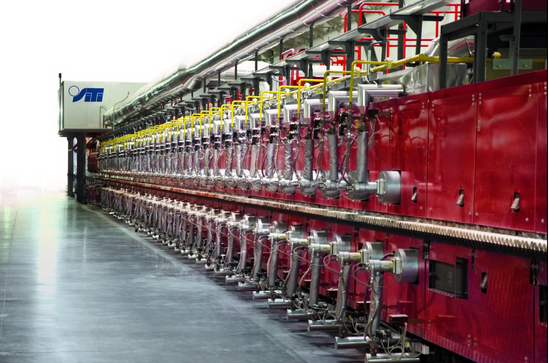
With its low energy consumption and environmental emissions, simple and linear architecture, and outstanding ease of use, upgrading and flexibility, the Titanium kiln from SITI B&T is proven technology.
The Titanium range of latest-generation kilns is devoted in particular to large-size panels and slabs. The Titanium Wave XXL variable-roof kiln, and the Titanium Slab twin-channel kiln, are claimed to be the most innovative, high-performance solutions currently available on the market.
The Titanium technological process consists of:
- System for recovering heat from the MHR slow cooling zone, which supplies the burners with preheated air at 230°C with an oxygen content of 21% independently of whether or not the kiln is empty or full;
- Configuration in which the burner rings are divided into multiple independent groups according to the length of the kiln and associated with a system for measuring and controlling oxygen content;
- Titanium burners based on post-combustion technology. The fumes coming out of the discharge nozzle of the primary combustion chamber are capable of drawing the internal kiln atmosphere, thereby guaranteeing complete oxidation of the fumes originating from the first stage.
The main advantages of this combustion system are:
- Reduced flue consumption thanks to maximised combustion efficiency. The patent- ed technical and construction characteristics of the Titanium burner guarantee constant consumption over time of 390 Kcal per kg of product in the firing of porcelain stoneware;
- Reduction of up to 30% in the flow rate of fumes sent to the flue compared to a traditional kiln due to the smaller volume of combustion air introduced into the kiln system. This results in lower investment and maintenance costs of the fume filter;
- Reduction in emissions from the fume flue, with consequent reductions in CO (the process based on post-combustion guarantees complete oxidation of fuel); CO2 (the smaller quantity of fuel required to fire the product reduces the specific production of carbon dioxide); and NOx (due to the controlled oxygen content and the reintroduction of the fumes contained in the internal kiln atmosphere into the combustion chamber);
- Reduction in electricity consumption due to the lower power required for managing the primary combustion air and fumes.
When developing Titanium technology, special attention was devoted to the choice of materials. If the kiln is to be used in particularly severe thermal and chemical conditions, SITI B&T can propose the special Titanium Heavy Duty version featuring burner parts with a specific composition and masonry with ultra-resistant protective treatments.
More at: http://www.sitibt.com/en/

 Transformational Tile Technology