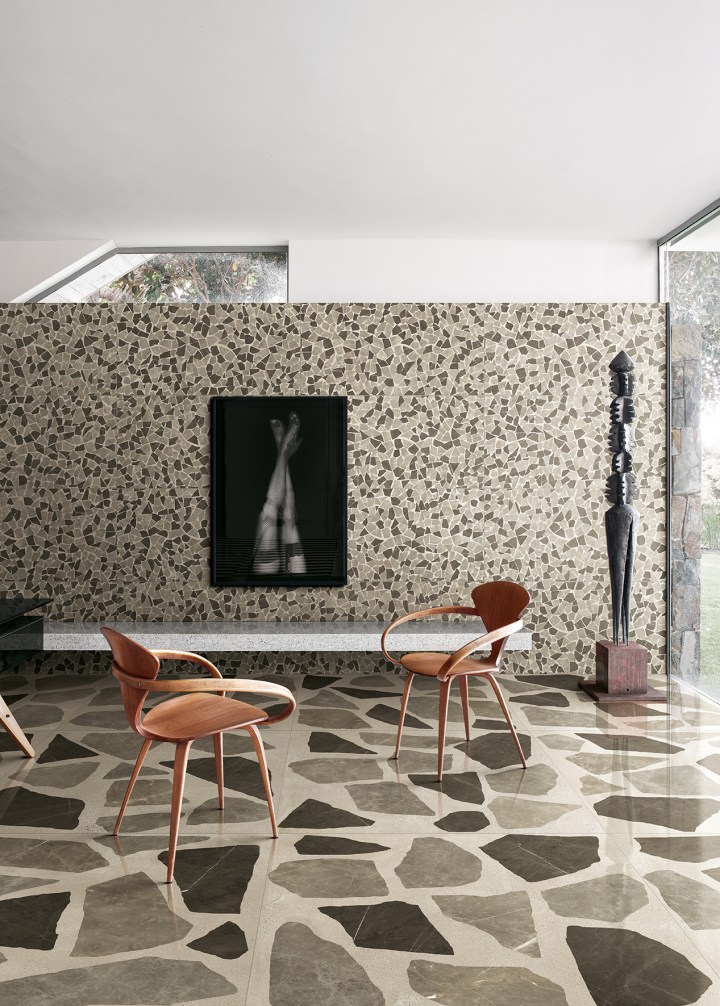
Ceramic tile is perhaps the most dynamic of all the surface finishing sectors. There are three main drivers for this. The first is the progressive sophistication of tile manufacturing technology – continuous pressing, digital inkjet decoration, rectification, polishing, new frits and glazes, to name but a few – have accelerated the technical and aesthetic evolution of ceramic tiles.
The second is the overarching design trends that encourage ceramic tile designers to continually update and enhance their tile portfolios. Be in no doubt, ceramic tiles is a highly fashion- and design-conscious market, that now sets, rather than follows, the global interior design agenda.
And, thirdly, there is the dynamic competitiveness within this truly global market. The past few decades have seen European dominance of the sector, notably in Italy and Spain, challenged by the emergence of world-class manufacturers in China, Brazil, Turkey, India, the USA and a raft of other countries, especially in Eastern Europe and Asia. Indeed, there are very few developed or developing economies that do not now have at lease one significant tile manufacturer. A great example is the United Arab Emirates which is home to one of the true global tile giants, RAK Ceramics. Similar large scale and highly commercial manufacturers can also be found in Mexico, Germany, the Czech Republic, The Netherlands, Portugal, Vietnam … the list goes on.
The rapid pace of product development is most clearly seen at the international tile exhibitions that are the key commercial drivers of this global industry. The top event is Cersaie, held annually at Bologna, Italy; but there are also important trade exhibitions in Spain (Cevisama), Turkey (Unicera), the USA (Coverings and Surfaces), and Brazil (Expo Revestir); as well as China, India and several other emerging markets.
Last year, the key tile product areas were larger formats for porcelain floors, new generation ultra-large panels, 20mm pavers for external applications, and overlays with effects to deepen aesthetics of graphics or traditional glazes, planks and metallics. Alongside today’s massive tile (or gauged panel) formats – up to a mind-blowing 4.8m by 1.6m – small format glazed wall tiles are enjoying a significant return to favour: a retro trend that looks to the future.
Unseen to all but the most expert eye; the most important thing to understand about the latest tile designs is what goes on underneath, within and on top of the glaze layer. The proliferation of new glaze, ink, and frit technologies over the past few years has seen many manufacturers employing these new tools to enhance what were already exciting collections. At the top end, therefore, the bar has been raised significantly. Manufacturers who are simply employing a single glaze and printing a digital image on tile in ceramic inks are now behind the curve. Selecting a good design, and understanding the optimal colours for the target marketplace, is now just the starting point for a creating a winning collection.
New digital inkjet printers are becoming commonplace. Featuring 10 to 12 bars of heads, manufacturers can use five heads for colour (six if they are employing white inks) and then use the remaining four to six heads for special effects.
Available effects include:
• Reactive inks that sink through the glaze creating relief, or rise up creating structure
• Lustre – which can be in multiple colours
• Metallics – which can be feature different metals
• Inkjet glue – which is used to adhere a granular frit or dry glazes
• New glazes – gloss, matt, or satin
The staggering array of possible effects available today are forcing manufacturers to decide on a design language and specialise in certain looks since they only have so many open channels available to them in their printers. What this means for specifiers, and the specialist distributors that supply them, is the most nuanced and sophisticated tiles ever seen. Stone-effect tiles can now have sunken veining or mica flecks, just like the real thing. Timber-effect tiles can feature a gloss effect on the raised grain structure, as if burnished to a deep glow by generations of slippered feet. Classic ceramics can now be created with the wabi sabi elegance and grace of an ancient piece of Rakū pottery. Tile is today’s sophisticated surface finish of choice.

 Transformational Tile Technology